

A reflection on grief, love and a lunar moment shared with the world, by Dani Stobbs, Grief Support Services Manager at Pilgrims Hospice Society.
On a cozy Saturday morning, the kids and I were snuggled up, sipping on tea, and tuned into the live stream of the Artemis II crew as they journeyed around the moon. Little did I know that we would get to witness a beautiful yet heartbreaking moment live, together.
On April 6, 2026, astronaut Jeremy Hanson made an emotional announcement to mission control to name a lunar crater – “a bright spot”- after fellow astronaut Reid Wiseman’s late wife, Carroll. “Loud and clear… thank you,” came back from the ground.
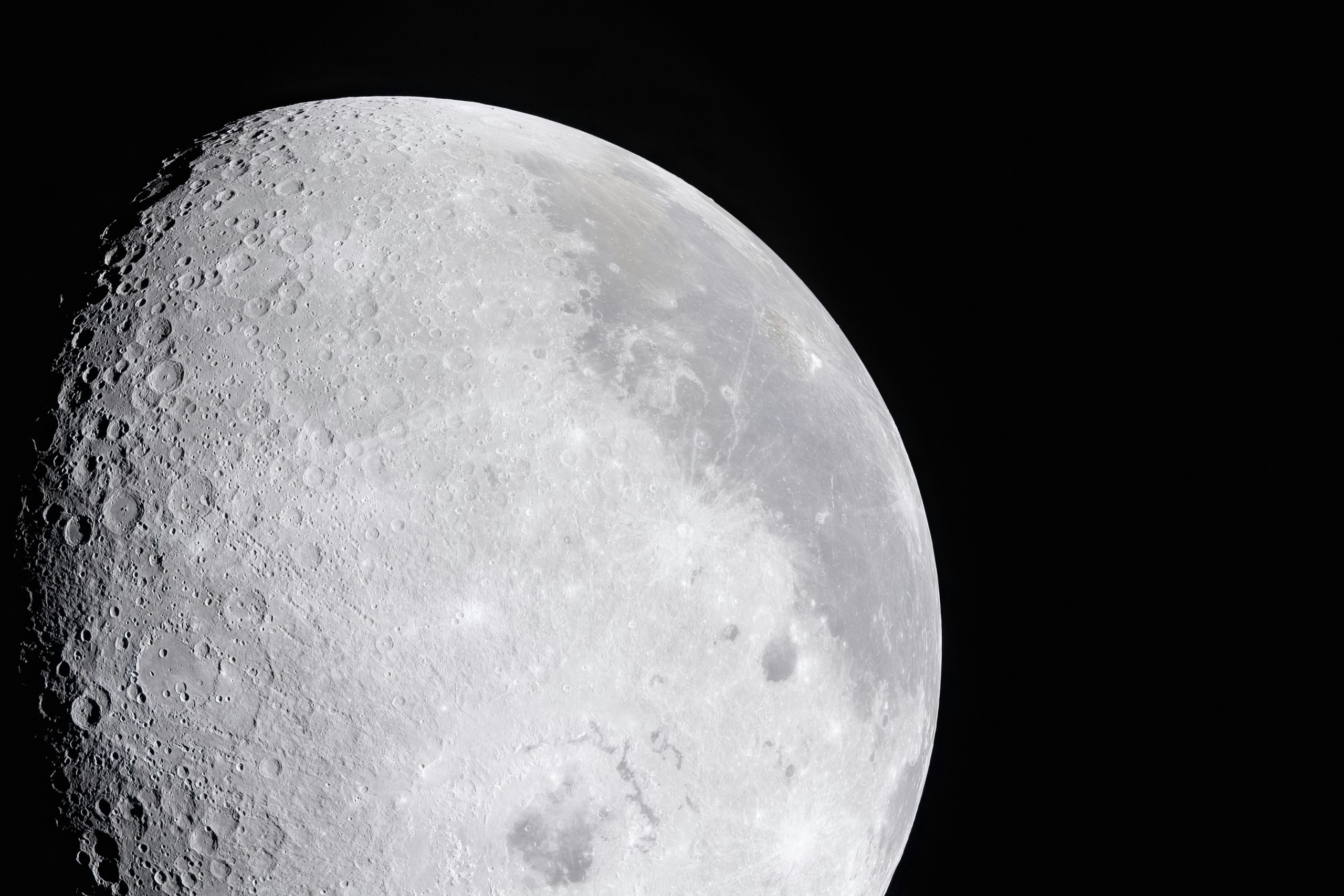
For a moment, time and space felt frozen, both here on earth and in outer space. Grief had reached the very far stretches of the black abyss, and now on the moon, there is a crater, named in love and in grief, that shows that no matter how far you travel, love and grief exist. That grief matters. That those who have gone before us are still right there with us, sometimes more with us than ever before.
I could not help but allow my tears to seal this moment, and hold my kids tighter, sharing with them that of all the moments that felt historical about this mission, this right here was it. The most meaningful of them all, the human journey of love, connection and compassion.
Copy. Moon Grief. Copy. Moon Joy.
What struck me, as someone who regularly witnesses the grief of others and also moves in my own grief with fluidity and integration, was that this was a moment that felt so intimate for the crew, opened up to the whole world to sit in their grief, and in our grief together – out loud. It felt like a move towards a world that bears witness publicly, that isn’t inconvenienced by a grief that time can never heal. We got a front row seat to the beauty of remembrance and ritual, and to watch four humans cling together in a compassionate embrace, floating, literally in space, crying with one another as they acknowledged the beauty of the moment, the profound grief, and the expanse of love that could not be contained to just earth. The raw and real journey of grief and love was palpable, tucked together in that tiny cabin, and yet reaching us 238,855 miles away.
Your grief matters. I have never felt the moon closer than I do now, when I look up. There lies a crater called Carroll. And how beautiful that it is seemingly not just there for Reid Wiseman and his daughters, but for us, too. Shared grief soothes the soul. We can all hold that bright spot close as we look up and remember those we have loved and those who have gone before us.

Earthset captured through the Orion spacecraft window at 6:41 p.m. EDT, April 6, 2026, during the Artemis II crew’s flyby of the Moon. A muted blue Earth with bright white clouds sets behind the cratered lunar surface. The dark portion of Earth is experiencing nighttime. On Earth’s day side, swirling clouds are visible over the Australia and Oceania region. In the foreground, Ohm crater has terraced edges and a flat floor interrupted by central peaks. Central peaks form in complex craters when the lunar surface, liquefied on impact, splashes upwards during the crater’s formation. Image credit: NASA
We cannot cure grief, but we can care for it together. We can name craters after it, we can embrace it, we can move forward together, hand in hand, with grief and joy.